

𝗦𝗘𝗖 𝘄𝗲𝗹𝗰𝗼𝗺𝗲𝘀 𝗣𝗛 𝗿𝗶𝘀𝗲 𝘁𝗼 𝘂𝗽𝗽𝗲𝗿-𝗺𝗶𝗱𝗱𝗹𝗲 𝗶𝗻𝗰𝗼𝗺𝗲 𝘀𝘁𝗮𝘁𝘂𝘀, 𝗰𝗼𝗺𝗺𝗶𝘁𝘀 𝘁𝗼 𝗱𝗲𝗲𝗽𝗲𝗿 𝗯𝘂𝘀𝗶𝗻𝗲𝘀𝘀, 𝗰𝗮𝗽𝗶𝘁𝗮𝗹 𝗺𝗮𝗿𝗸𝗲𝘁 𝗿𝗲𝗳𝗼𝗿𝗺𝘀
As seen on SEC’s Official Facebook – The Securities and Exchange Commission (SEC) has committed to advancing more business and capital market reforms as the Philippines officially climbed to upper-middle income status, highlighting the milestone’s positive impact in positioning the country as an attractive global investment destination.
The World Bank on July 1 announced that the Philippines moved to upper-middle income status from lower-middle income after the country’s gross national income per capita rose to USD 4,850, surpassing the category’s threshold of USD 4,636.
The country’s reclassification was driven by broad-based expansion across all major industries, with its gross domestic product increasing by an average of 5.8 percent annually over five years from 2021 to 2025.
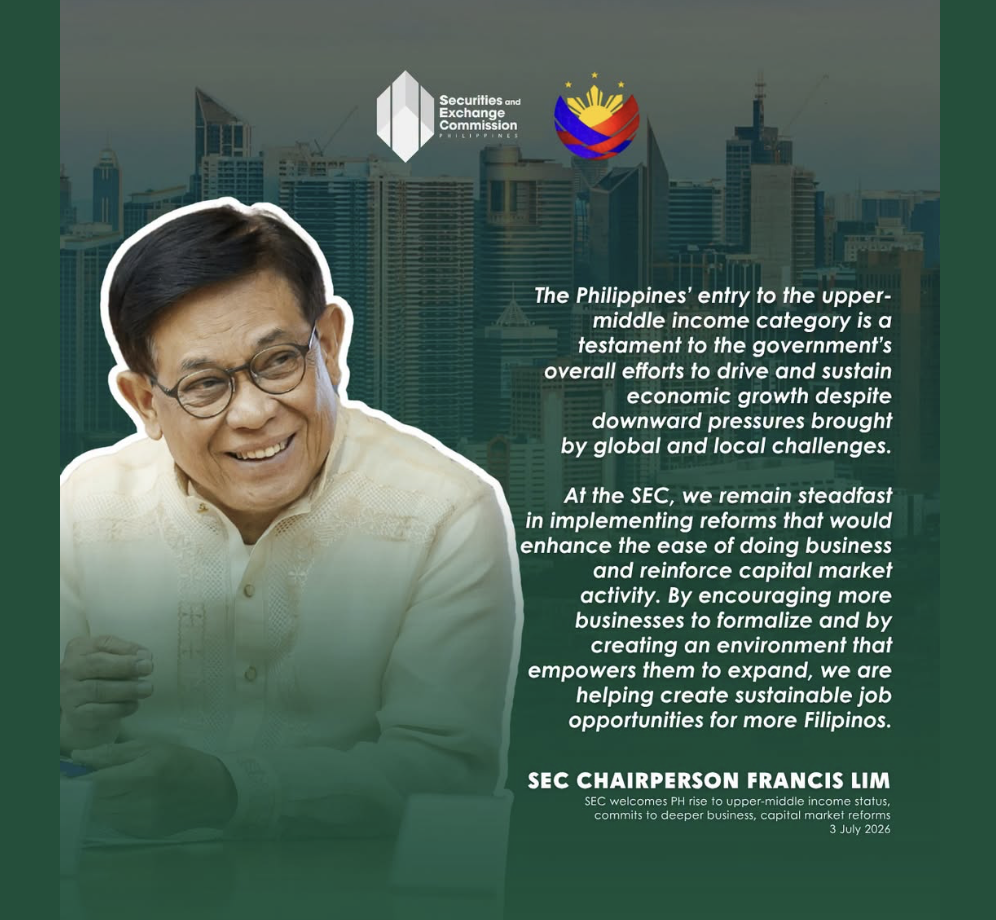
“The Philippines’ entry to the upper-middle income category is a testament to the government’s overall efforts to drive and sustain economic growth despite downward pressures brought by global and local challenges,” SEC Chairperson Francis Lim said.
“At the SEC, we remain steadfast in implementing reforms that would enhance the ease of doing business and reinforce capital market activity. By encouraging more businesses to formalize and by creating an environment that empowers them to expand, we are helping create sustainable job opportunities for more Filipinos,” he added.

Leave a Comment